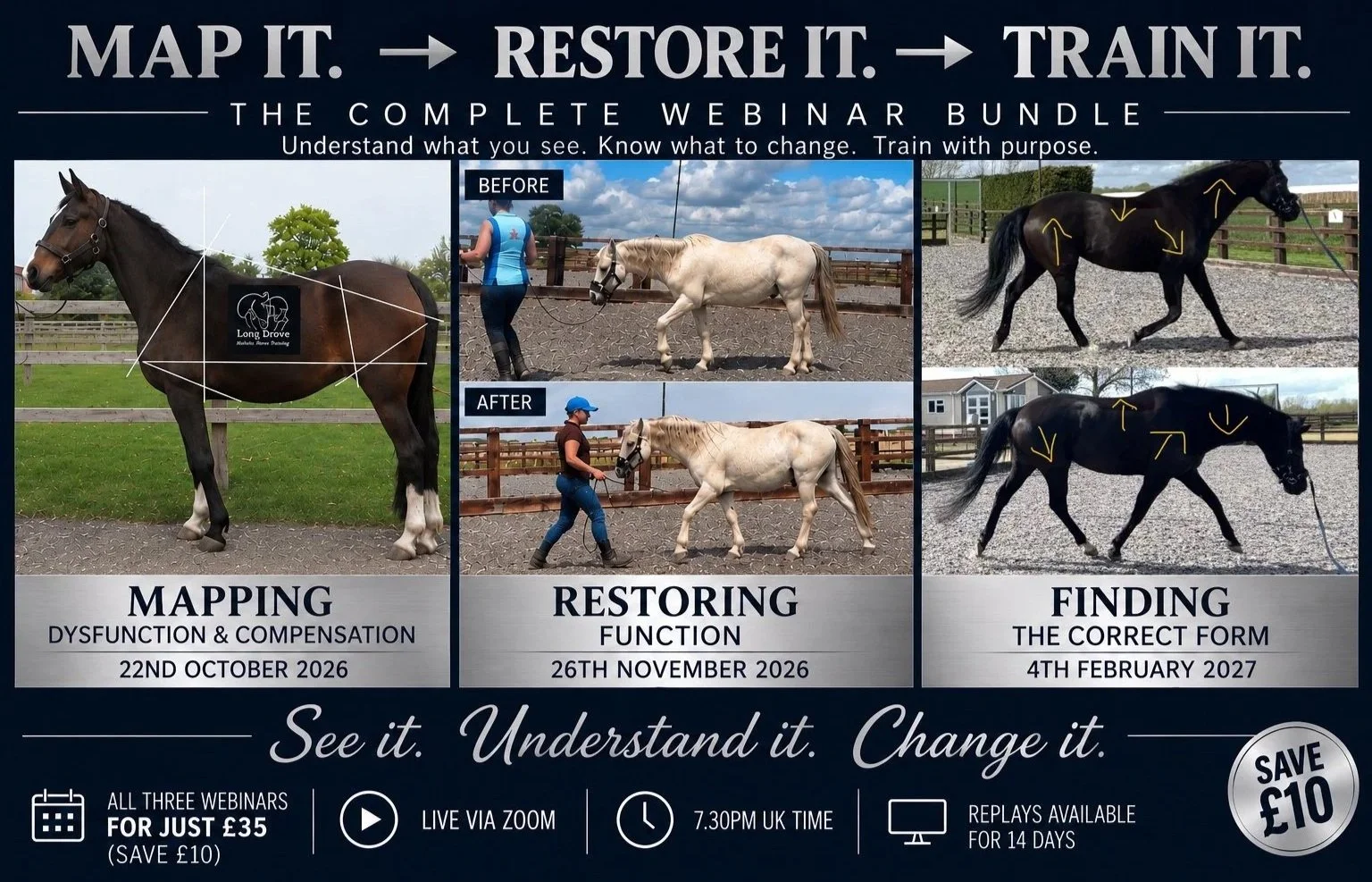
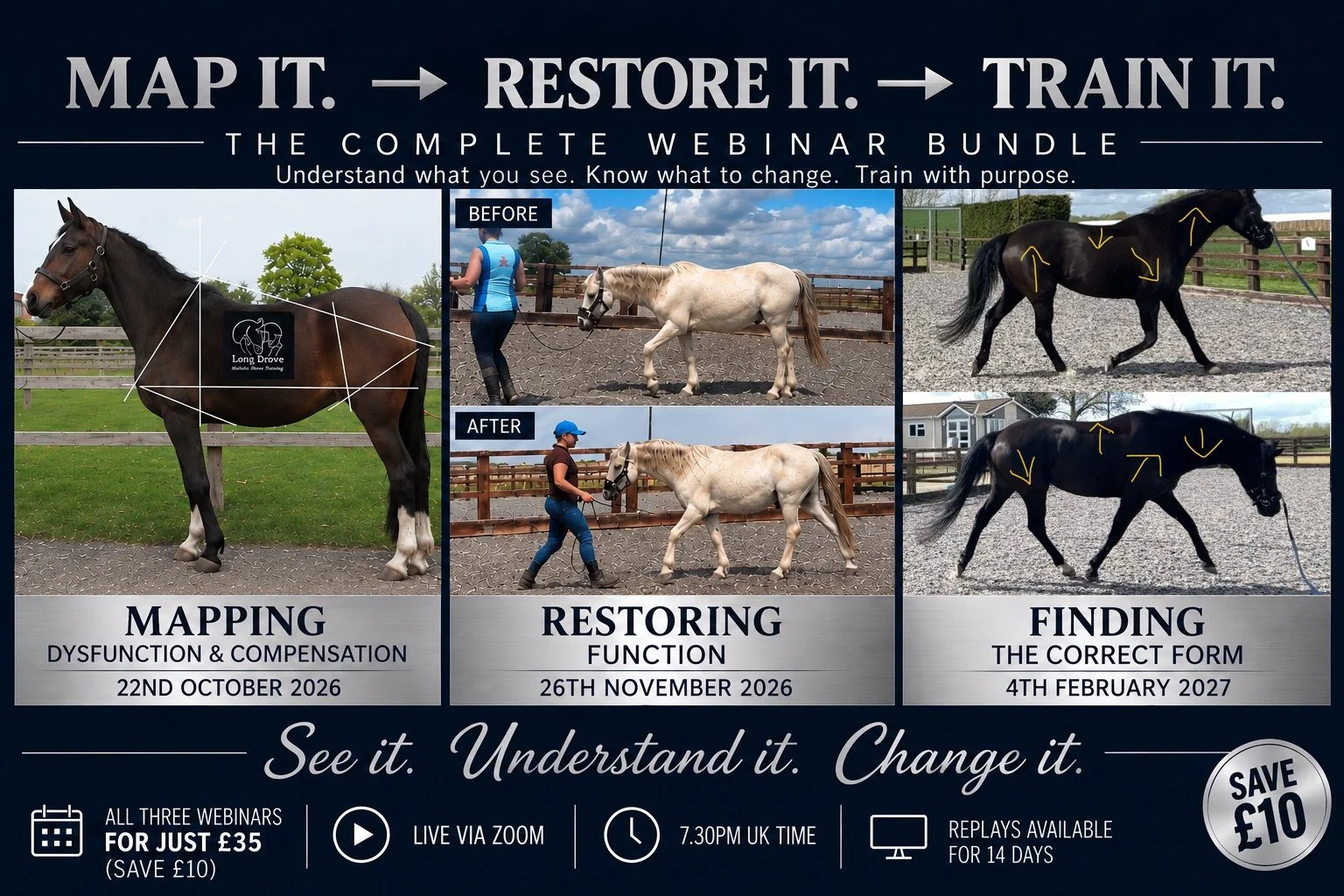
Map It. Restore It. Train It.
Three live webinars | £35 | Save £10
Understanding what you see in your horse is one thing.
Knowing what it means, what needs to change and whether the work you’re doing is actually creating that change is something else entirely.
Map It. Restore It. Train It. brings together three standalone webinars to take you through the complete process I use when looking at a horse’s body and deciding how to move that horse towards better function.
We begin by mapping what is happening.
We then use that information to decide what needs to change and where to begin.
Finally, we look at the training itself and how the form the horse uses during an exercise determines what we’re actually developing within the body.
Book all three webinars together for £35 instead of £45, saving £10.
MAP IT.
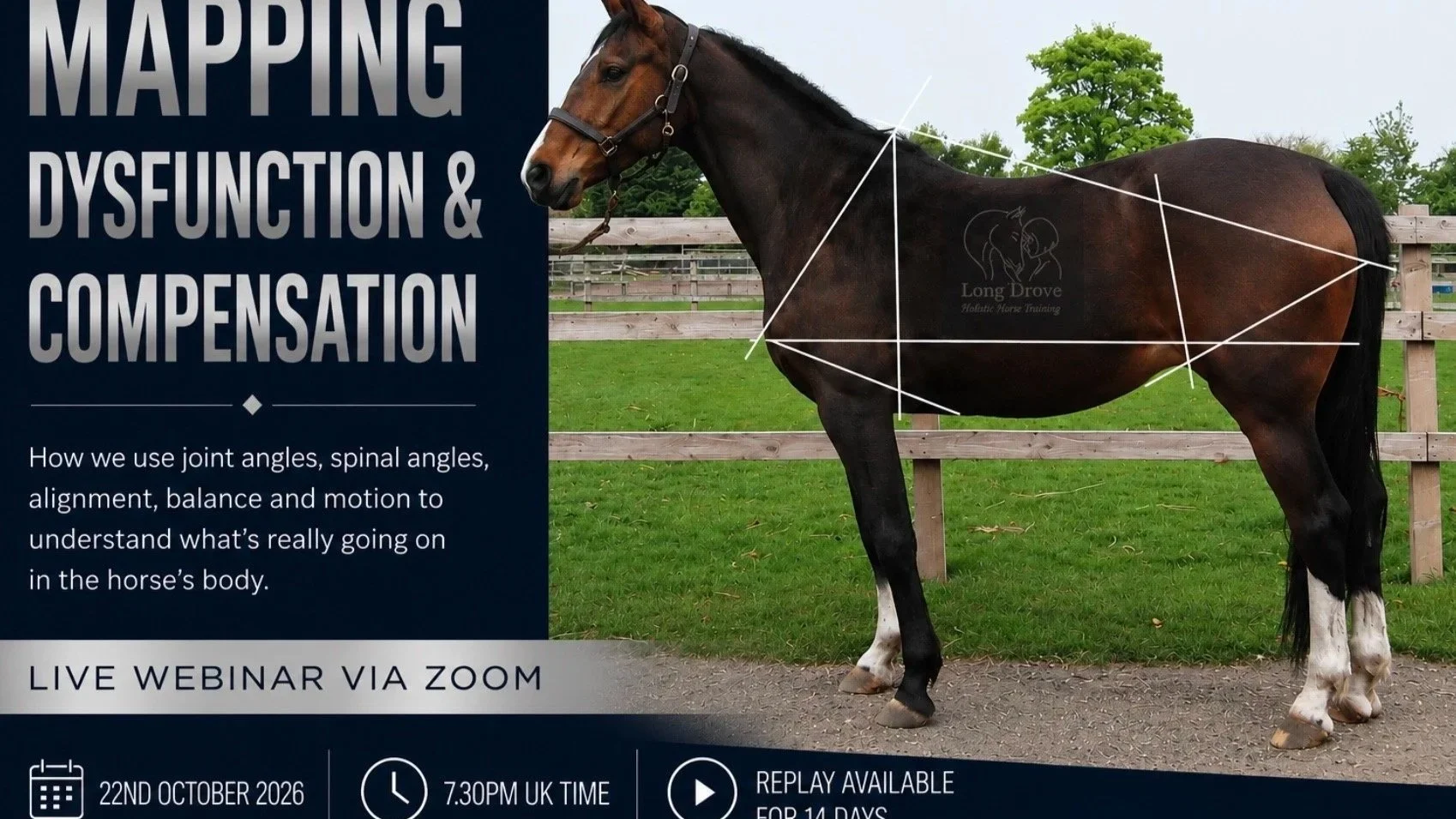
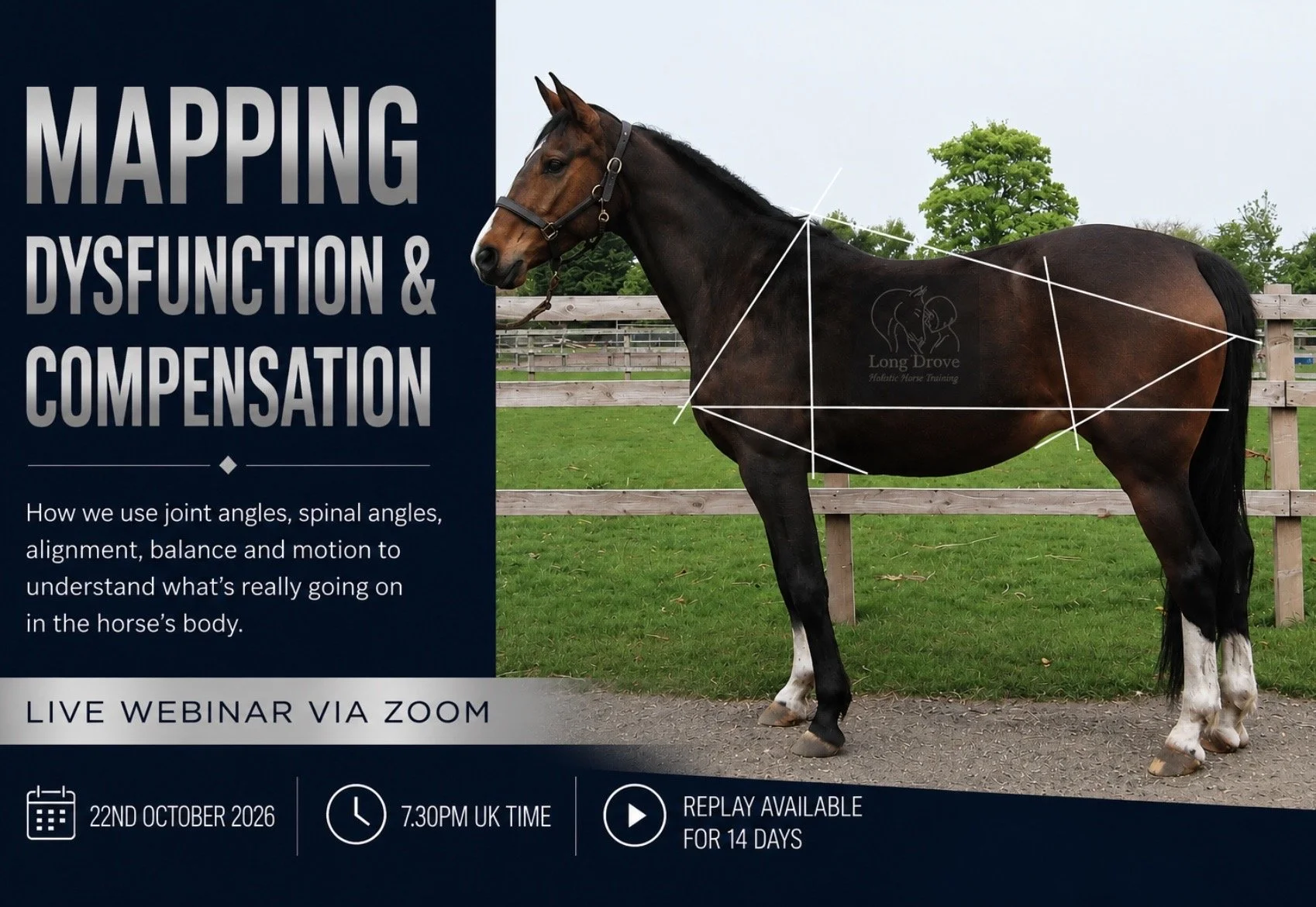
Mapping Dysfunction & Compensation
22nd October 2026
How do we take everything we can see in a horse’s body and begin to understand what it actually means?
In this webinar, we’ll look at how joint and spinal angles, posture, balance and alignment can be mapped together to build a much clearer picture of what is happening throughout the horse’s body.
We’ll explore the relationships between areas such as the shoulder, pelvis, back, sternum and spine, and look at how those findings relate to balance, alignment and movement.
Rather than looking at individual observations in isolation, we’ll begin connecting the information to understand patterns of dysfunction and compensation throughout the whole horse.
Map what is happening. Understand what you’re seeing. Connect the pieces.
RESTORE IT.
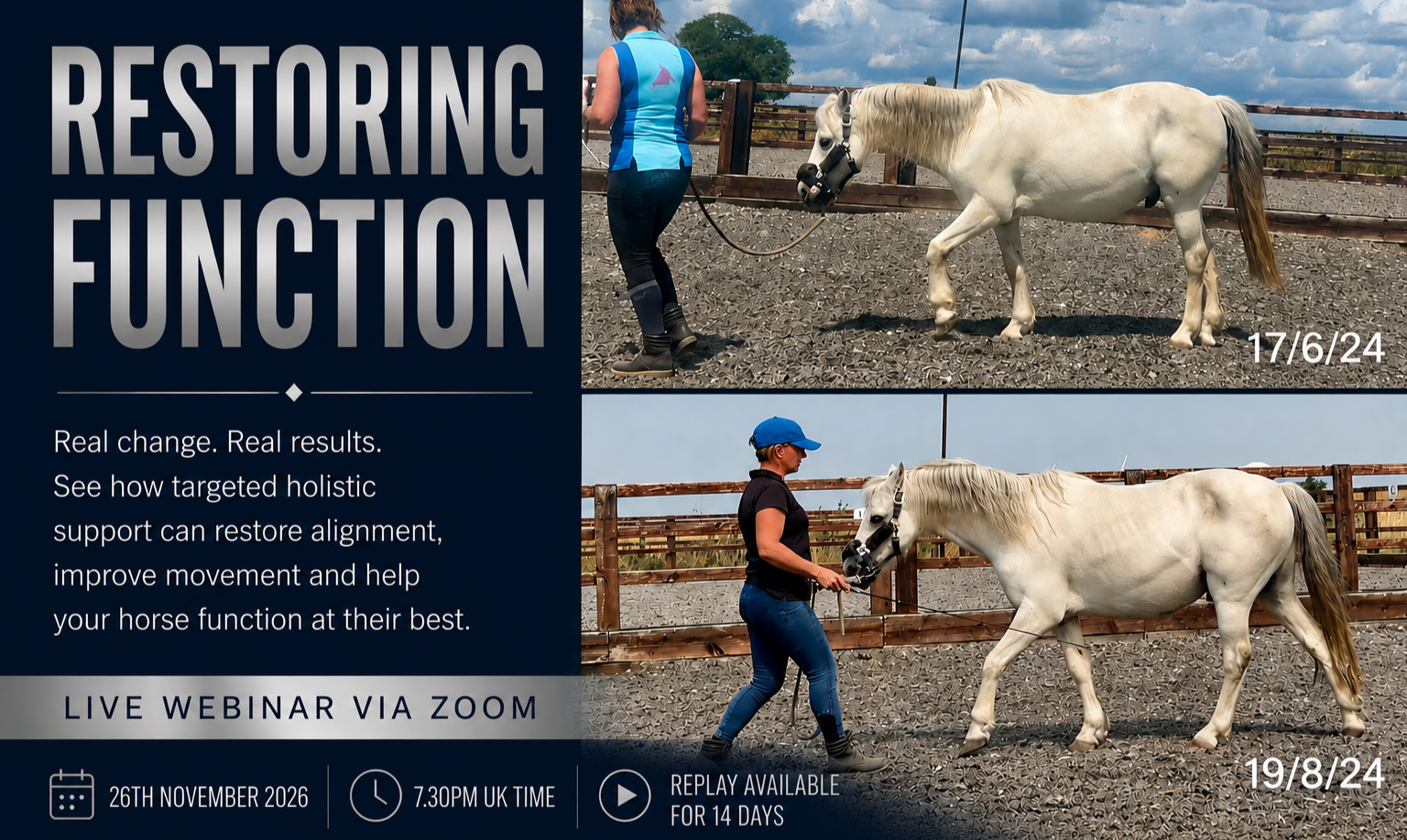
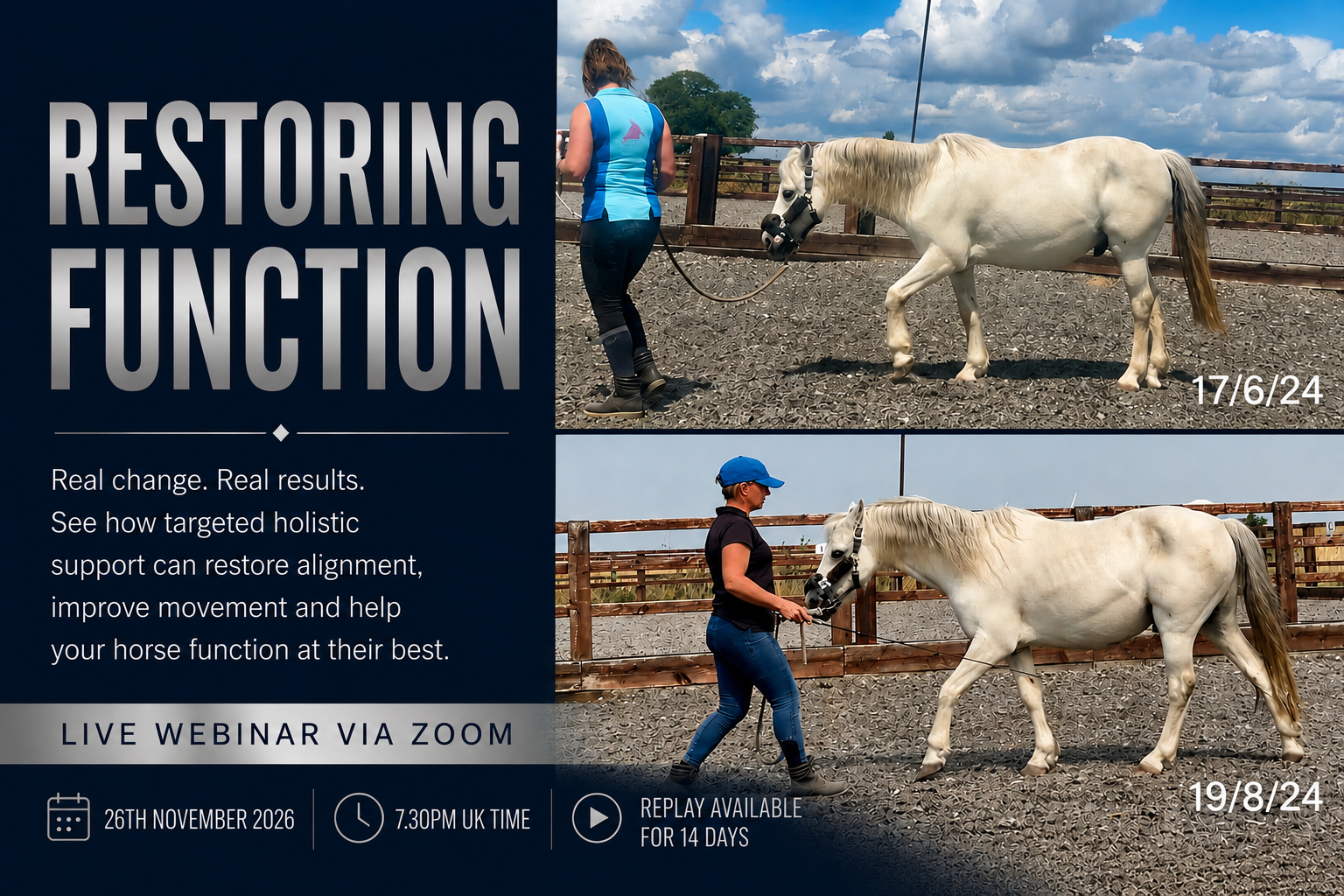
Restoring Function
26th November 2026
Once we understand what is happening, we have another problem:
What needs to change, and where do we start?
Using real horses as examples, we’ll look at how I prioritise findings and begin developing a plan for change.
We’ll explore which issues may be driving the bigger picture, which may be compensations, what is preventing the horse from using their body more effectively, and how improving one area can begin to influence another.
This is about moving beyond simply identifying problems and beginning to understand the strategy behind restoring better balance, alignment and spinal function.
Understand what needs to change. Decide what matters first. Know where to begin.
TRAIN IT.
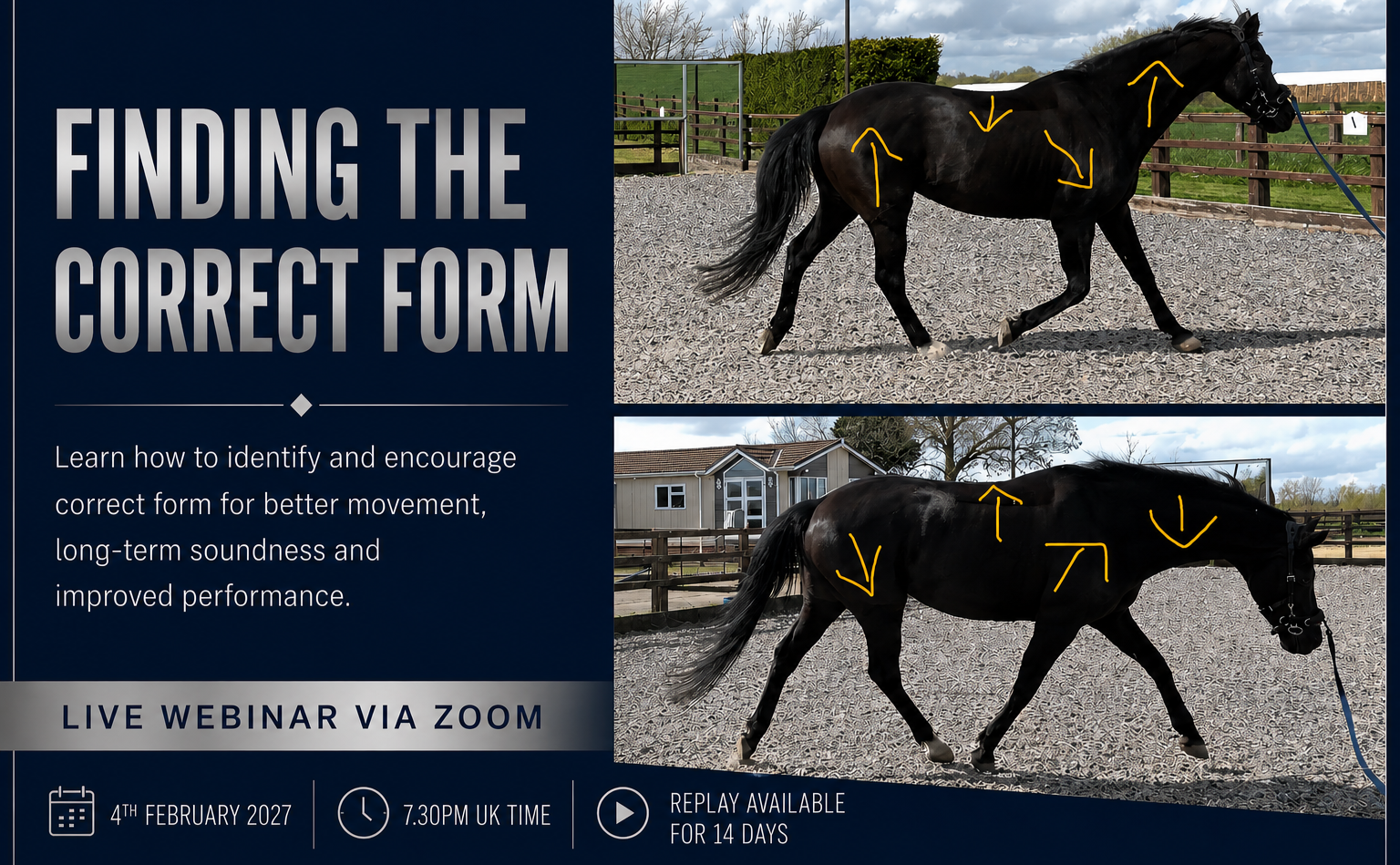
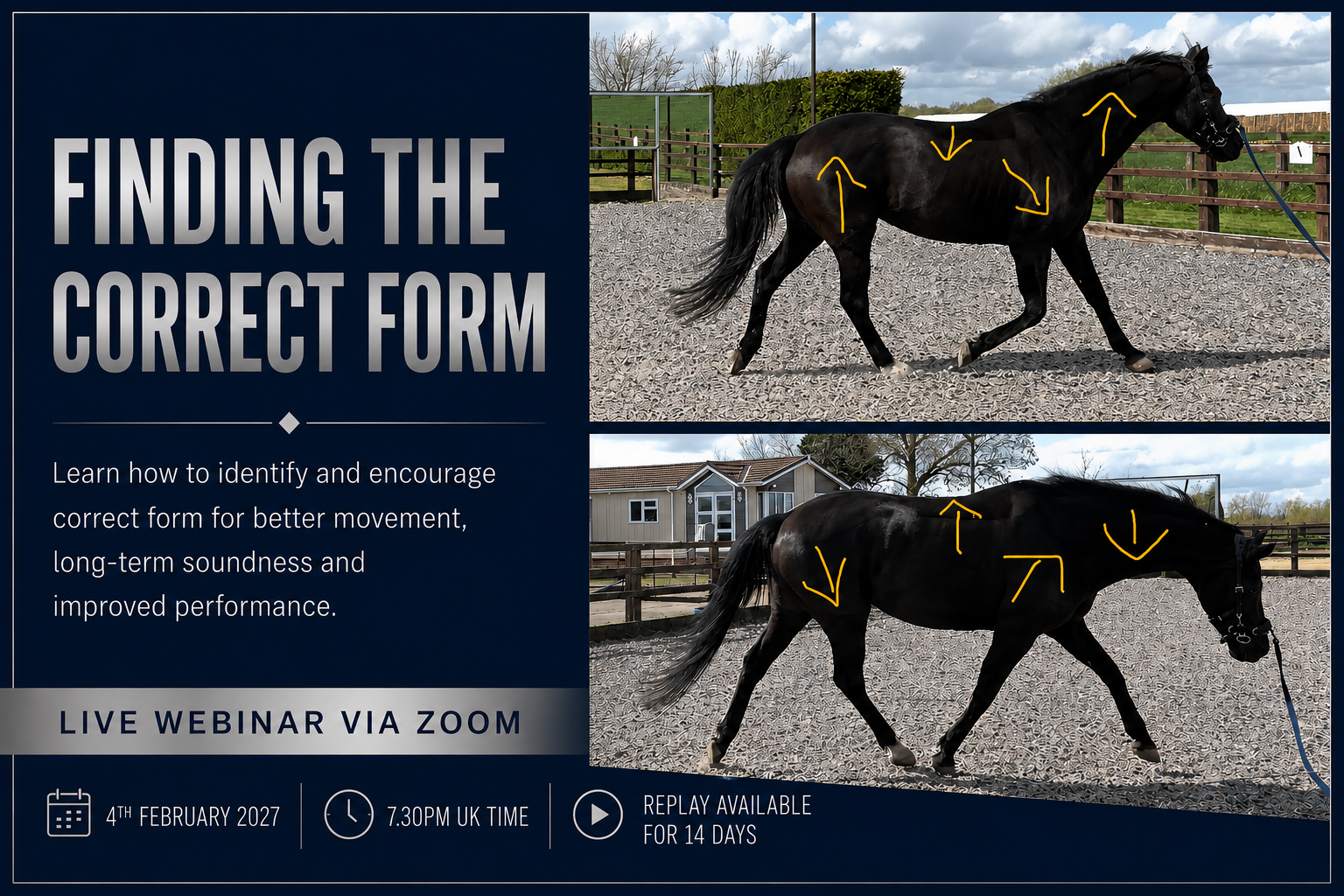
Finding the Correct Form
4th February 2027
Choosing an exercise doesn’t guarantee the result.
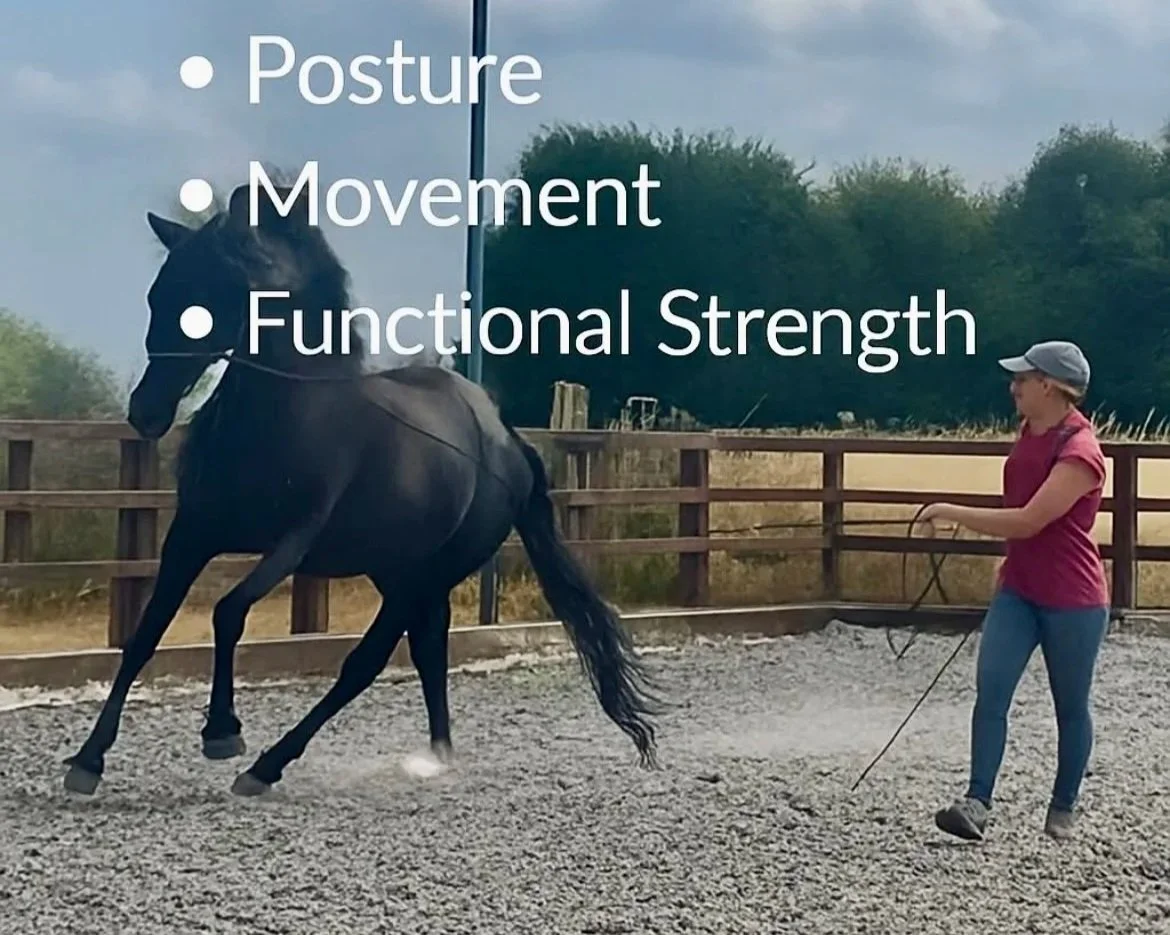
A horse can perform the same exercise in very different ways, and the form they use determines what we’re actually training within their body.
In this webinar, we’ll explore how balance, alignment, posture and spinal function influence the physical effect of an exercise.
We’ll look at how horses can use existing compensations to complete the work, how an apparently “correct” exercise can reinforce the wrong patterns, and how we recognise the form that will actually help create the change we’re looking for.
Because ultimately, it’s not simply what exercise you’re doing.
It’s how the horse’s body is functioning while they do it.
Know what you’re trying to train. Recognise the form that creates it.
Bundle Details
Includes: All three webinars
Format: Live online via Zoom
Time: 7.30pm UK time
Replay: Each webinar replay is available for 14 days following the live session
Individual price: £15 per webinar
Bundle price: £35
You save: £10
You don’t need to attend live to take part. If you can’t make a live session, you’ll still have access to the replay for 14 days following that webinar.
These aren’t three versions of the same webinar. Each explores a different part of the process and can be attended individually.
Together, however, they allow us to follow the journey from first understanding what is happening within the horse’s body, through deciding what needs to change, to understanding how we train towards that change.
Map it. Restore it. Train it.
See the body. Understand the problem. Create the change.