 Image 1 of 1
Restoring Function
Thursday 26th November 2026 | 7.30pm UK time | Live via Zoom | £15
You can see that something isn’t quite right with your horse. But knowing what you’re looking at and knowing what to do about it are two very different things.
Perhaps you’ve identified several areas of imbalance, restriction or compensation. The pelvis doesn’t look right. The back isn’t functioning effectively. The thoracic region is dropped. The horse is carrying too much weight through the forehand or compensating through the neck and hindquarters.
Suddenly, there are problems everywhere.
So what do you change first?
Trying to change everything at once isn’t the answer.
The real skill lies in understanding what needs to change first, what can wait, and how improving one area of the body can begin to influence everything else.
In Restoring Function, I’m going to take you through the process I use to move from understanding what is happening within a horse’s body to developing a plan for change.
Using real horses as examples, we’ll look at different presentations of dysfunction and compensation and work through the decisions that follow.
What are the most significant findings?
Which problems are primary and which may be compensations?
What is preventing the horse from using their body more effectively?
What needs to change to allow better spinal function, balance and alignment?
And, perhaps most importantly, where do we start?
We’ll look at how I prioritise what I see and how I decide what the initial focus of training needs to be.
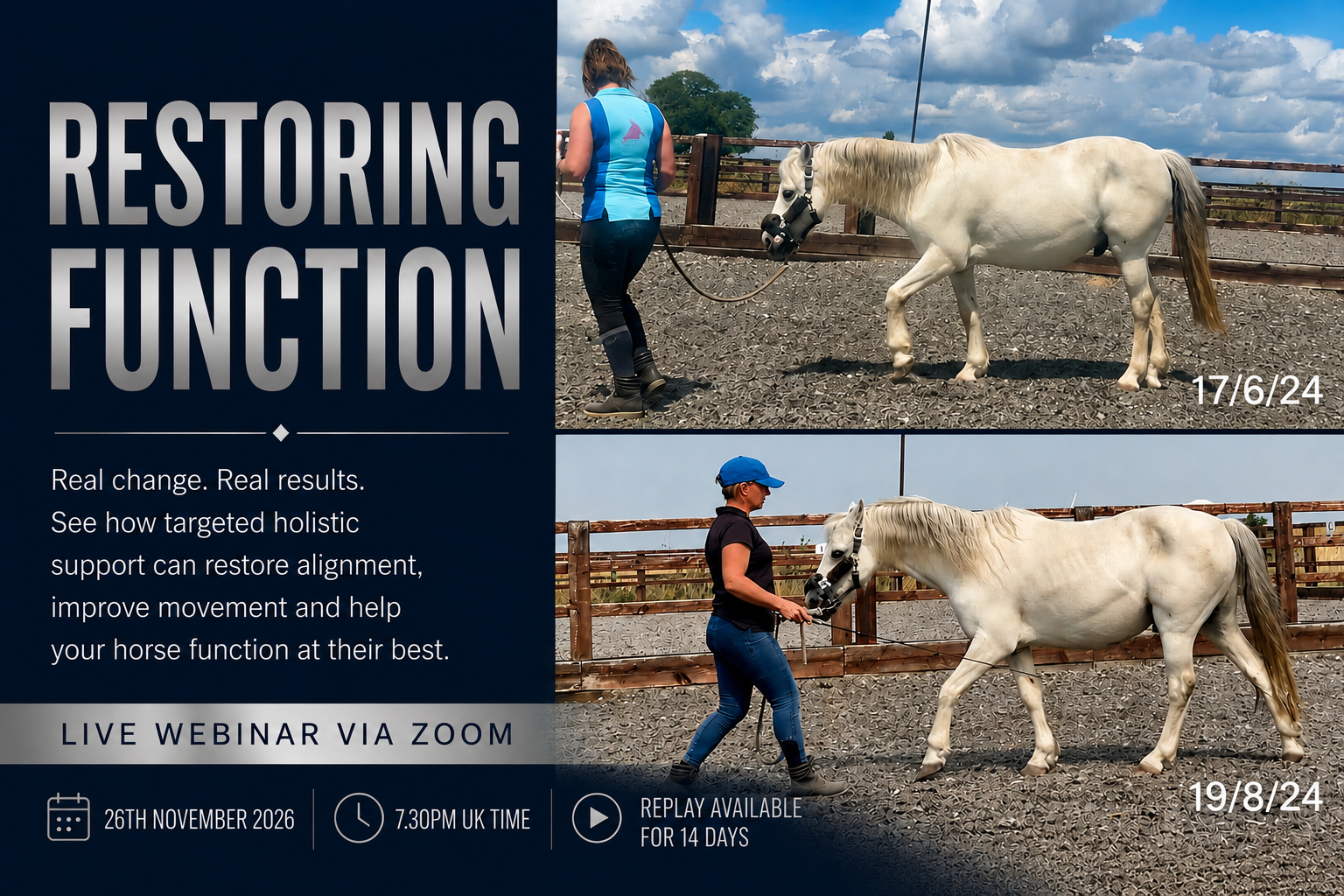
Because restoring function isn’t about trying to make every part of the horse look better at the same time. It’s about understanding the relationships within the body and creating changes that allow the horse to begin using themselves differently.
We’ll also explore what we’re actually aiming for when we talk about improving function.
What should begin to change through the body? What might we expect to see as the horse becomes better balanced and aligned? How can changes in one area influence another? And how do we recognise when we’re moving in the right direction?
The aim is to help you understand the process behind the training, rather than simply giving you a collection of exercises.
Because once we understand what is happening within the body, we can begin to make informed decisions about what that individual horse actually needs.
And from there, we can begin to restore function.
Webinar details
Date: Thursday 26th November 2026
Time: 7.30pm UK time
Location: Live online via Zoom
Price: £15
Replay: Available for 14 days following the live webinar
You don’t need to attend live to take part. If you can’t make the live session, you will still have access to the replay for 14 days.
Want to take the process further?
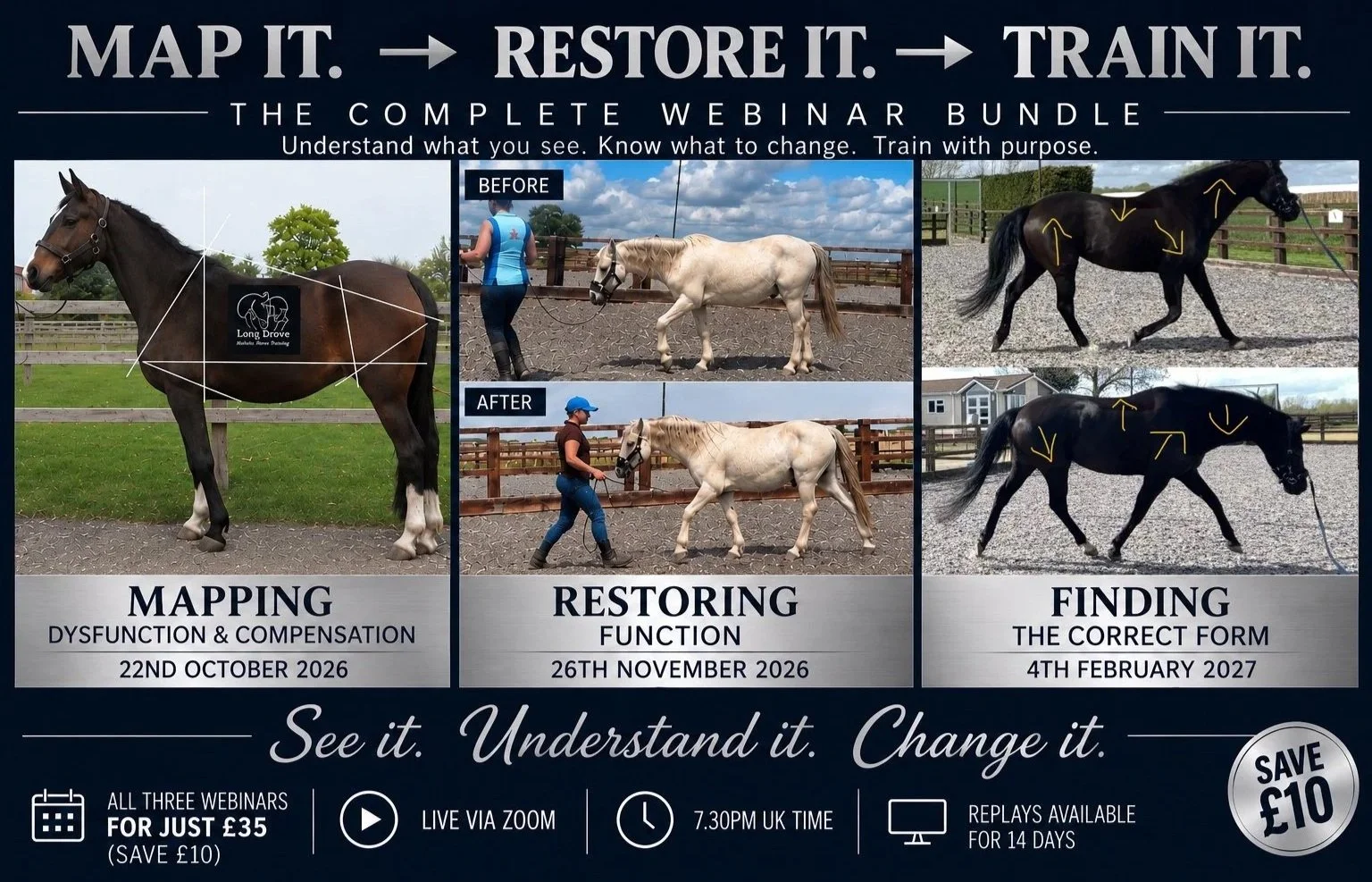
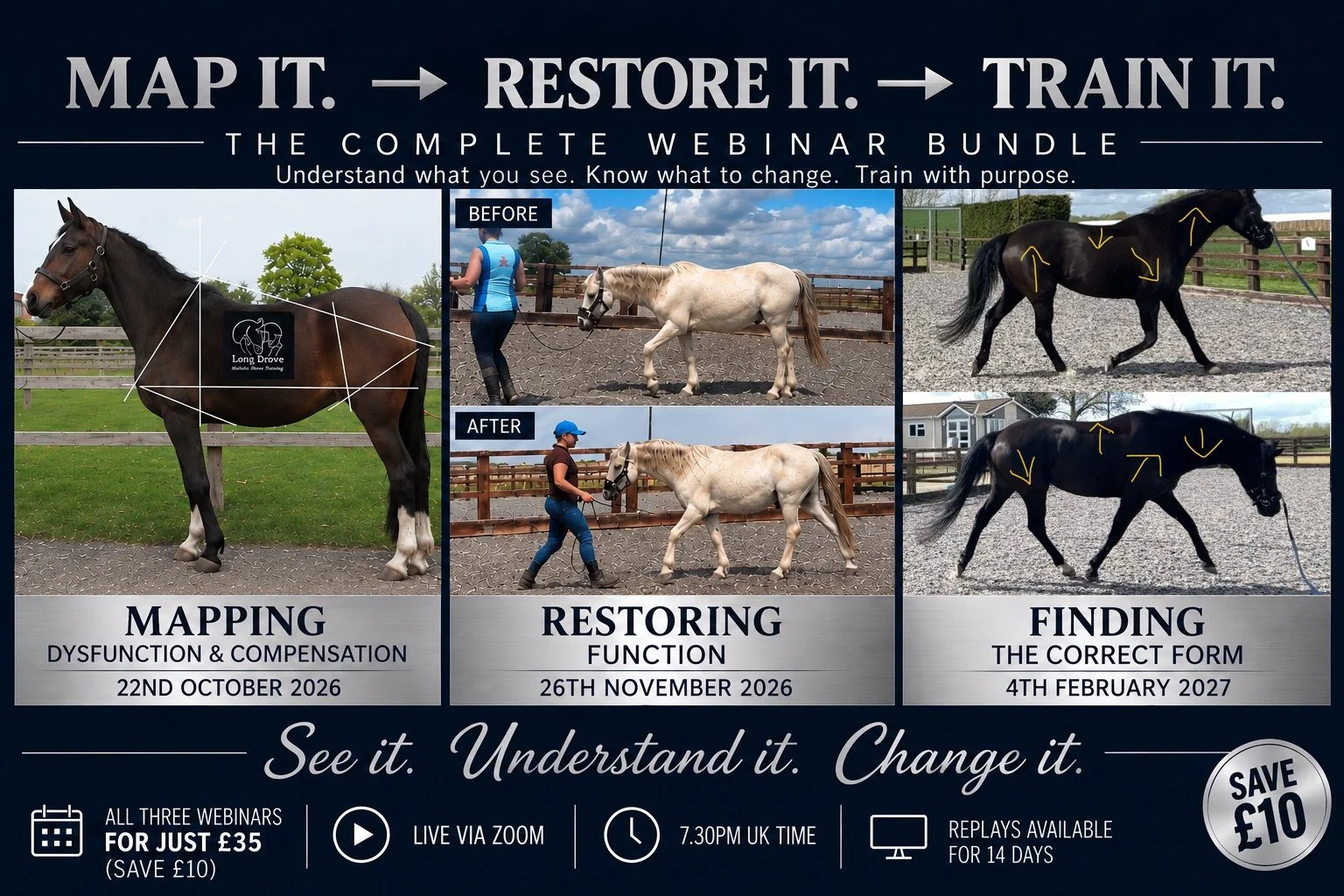
Map it. Restore it. Train it.
Restoring Function is one of three standalone webinars exploring the process I use to understand and influence the way a horse’s body functions.
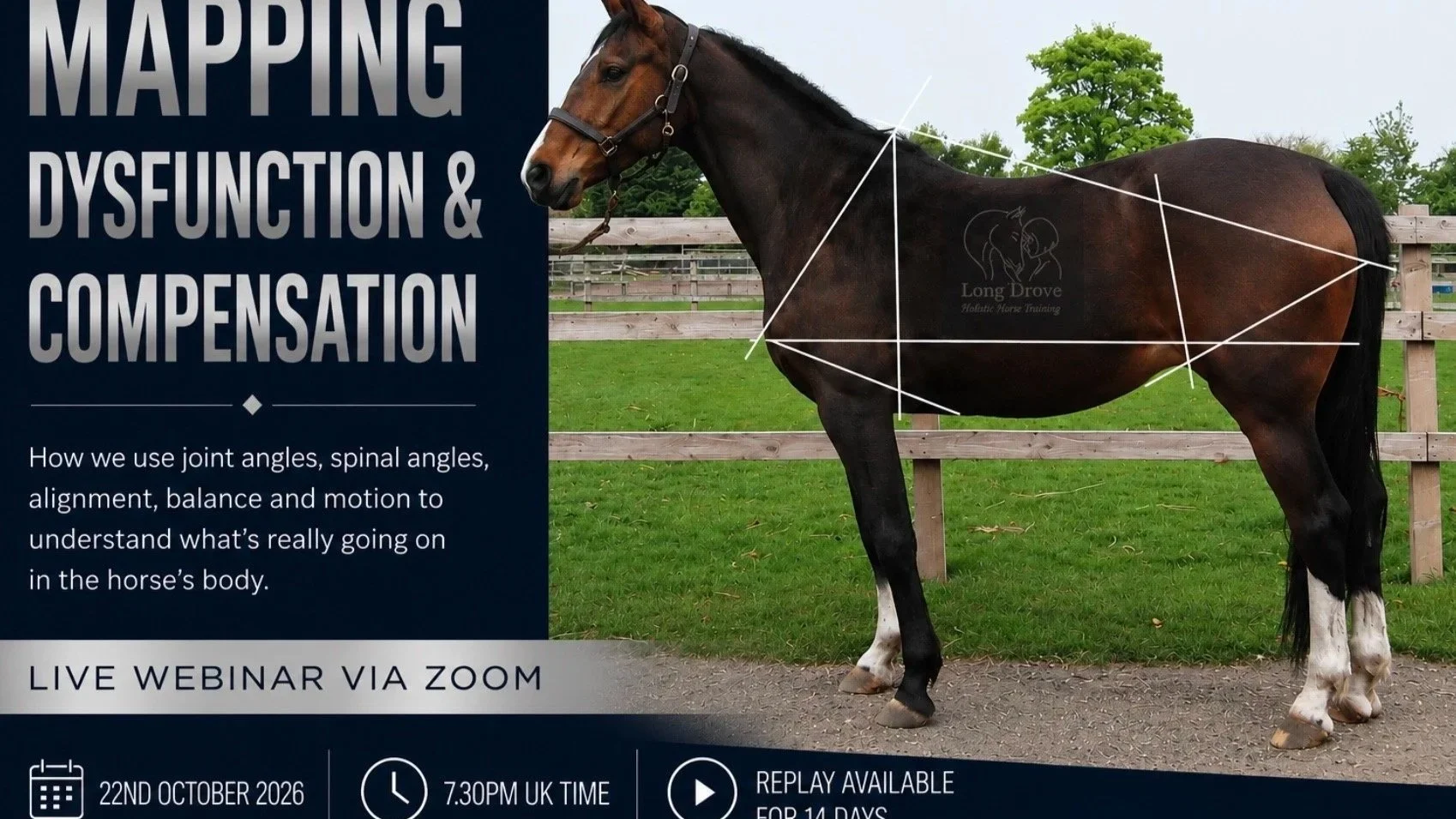
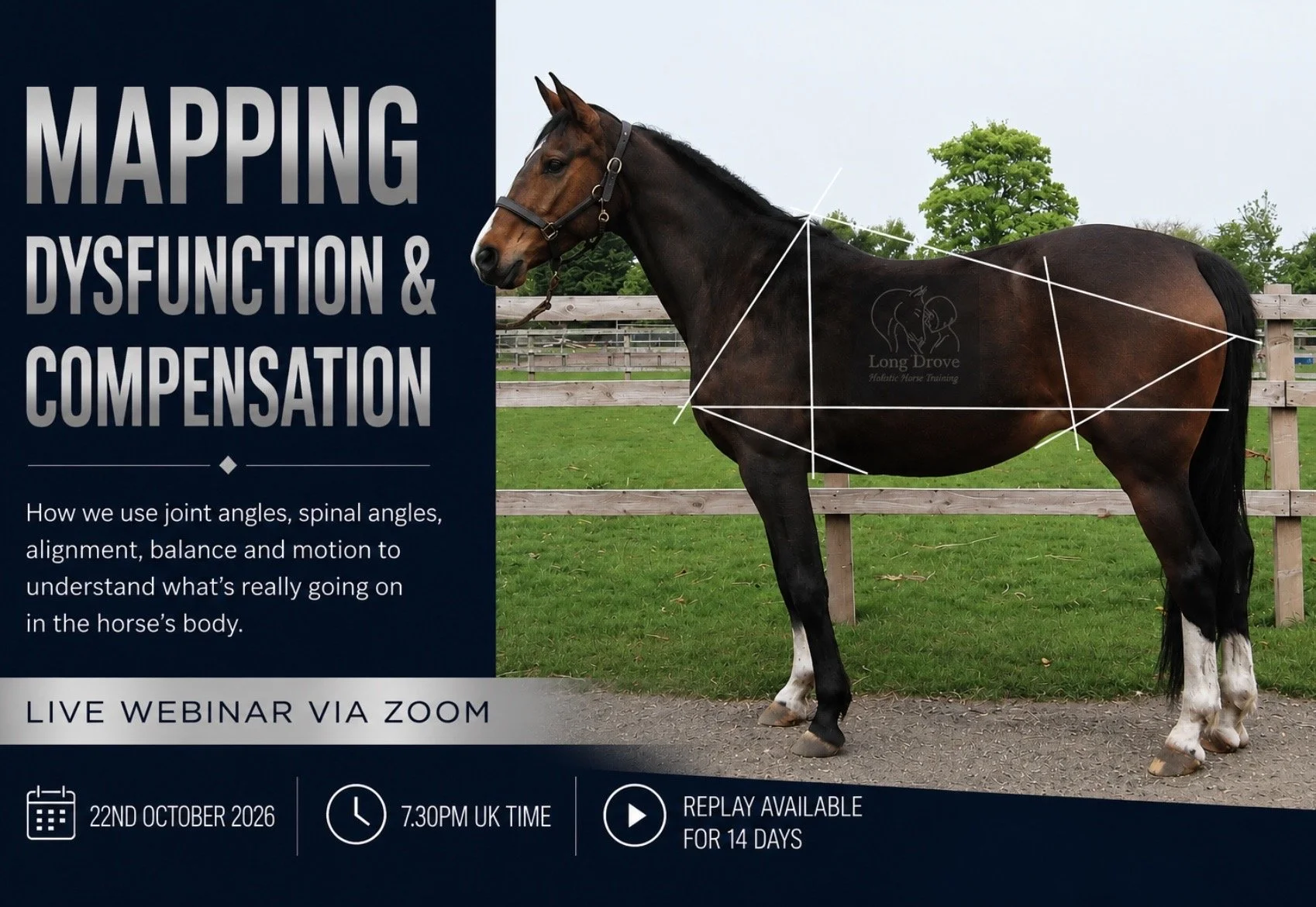
Mapping Dysfunction & Compensation
Map what is happening within the body and understand the relationships between dysfunction and compensation.
Restoring Function
Take that information and explore what needs to change, what to prioritise and where to begin.
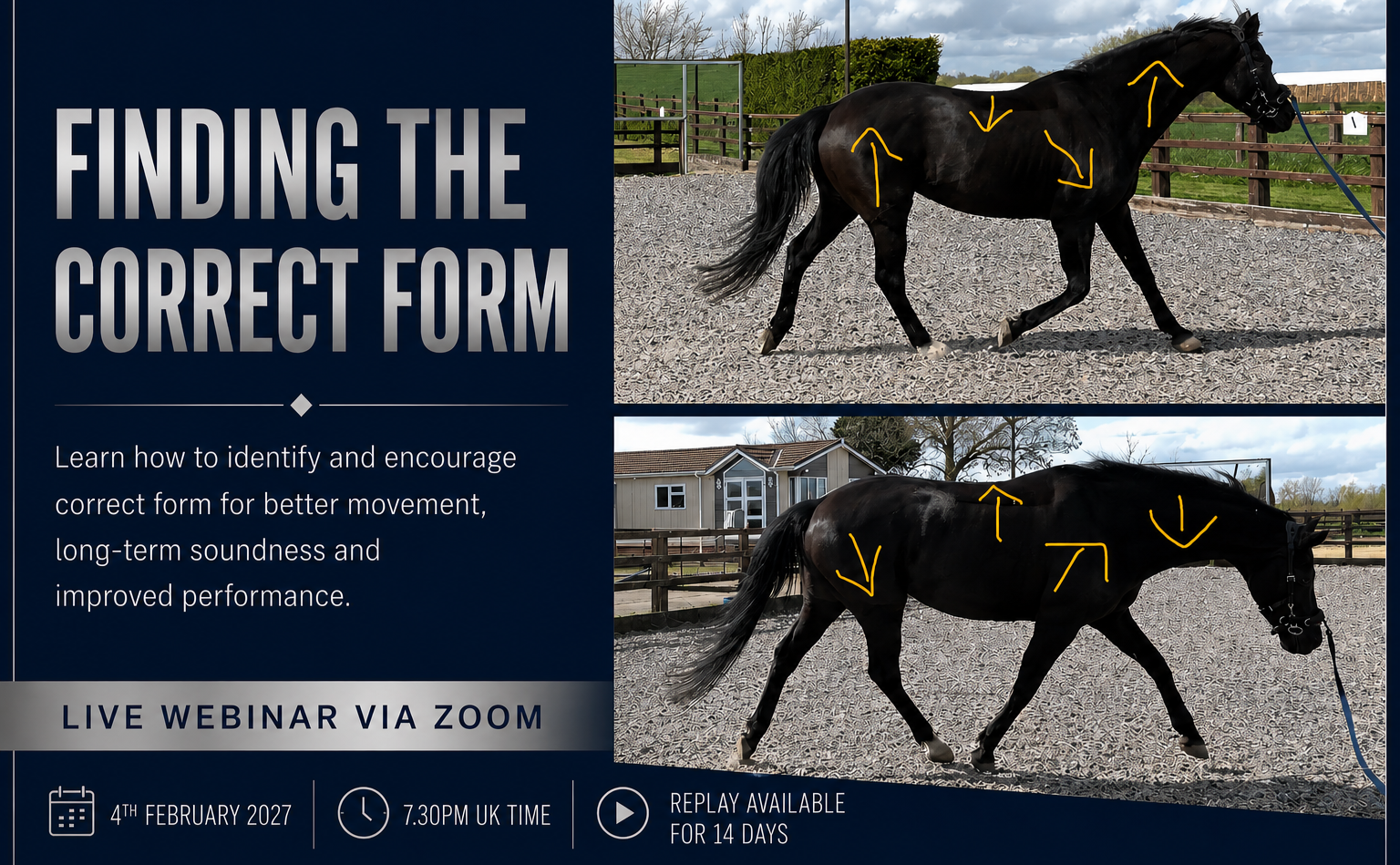
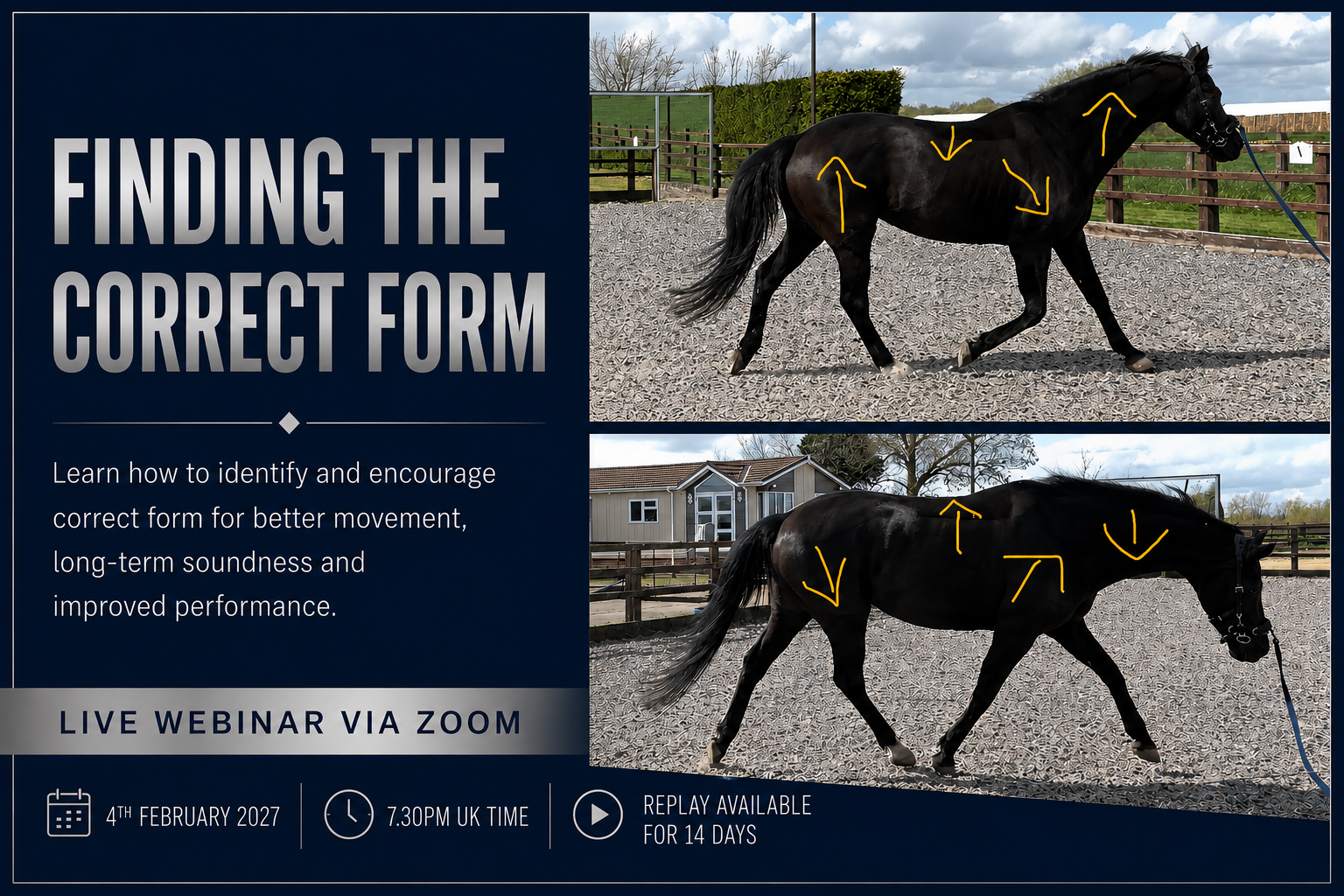
Finding the Correct Form
Understand why the form in which your horse performs an exercise determines what you are actually training.
Each webinar can be booked individually for £15, or you can book all three together for £35, saving £10.
The webinars stand alone, so you don’t need to attend all three. But if you want to follow the complete process from understanding what you see, through deciding what needs to change, to considering how the horse needs to use their body during training, the three webinars are designed to work together.
Book Restoring Function for £15, or choose the complete Map It. Restore It. Train It. webinar bundle for £35 and save £10.
Map it. Restore it. Train it.
Restoring Function
Thursday 26th November 2026 | 7.30pm UK time | Live via Zoom | £15
You can see that something isn’t quite right with your horse. But knowing what you’re looking at and knowing what to do about it are two very different things.
Perhaps you’ve identified several areas of imbalance, restriction or compensation. The pelvis doesn’t look right. The back isn’t functioning effectively. The thoracic region is dropped. The horse is carrying too much weight through the forehand or compensating through the neck and hindquarters.
Suddenly, there are problems everywhere.
So what do you change first?
Trying to change everything at once isn’t the answer.
The real skill lies in understanding what needs to change first, what can wait, and how improving one area of the body can begin to influence everything else.
In Restoring Function, I’m going to take you through the process I use to move from understanding what is happening within a horse’s body to developing a plan for change.
Using real horses as examples, we’ll look at different presentations of dysfunction and compensation and work through the decisions that follow.
What are the most significant findings?
Which problems are primary and which may be compensations?
What is preventing the horse from using their body more effectively?
What needs to change to allow better spinal function, balance and alignment?
And, perhaps most importantly, where do we start?
We’ll look at how I prioritise what I see and how I decide what the initial focus of training needs to be.
Because restoring function isn’t about trying to make every part of the horse look better at the same time. It’s about understanding the relationships within the body and creating changes that allow the horse to begin using themselves differently.
We’ll also explore what we’re actually aiming for when we talk about improving function.
What should begin to change through the body? What might we expect to see as the horse becomes better balanced and aligned? How can changes in one area influence another? And how do we recognise when we’re moving in the right direction?
The aim is to help you understand the process behind the training, rather than simply giving you a collection of exercises.
Because once we understand what is happening within the body, we can begin to make informed decisions about what that individual horse actually needs.
And from there, we can begin to restore function.
Webinar details
Date: Thursday 26th November 2026
Time: 7.30pm UK time
Location: Live online via Zoom
Price: £15
Replay: Available for 14 days following the live webinar
You don’t need to attend live to take part. If you can’t make the live session, you will still have access to the replay for 14 days.
Want to take the process further?
Map it. Restore it. Train it.
Restoring Function is one of three standalone webinars exploring the process I use to understand and influence the way a horse’s body functions.
Mapping Dysfunction & Compensation
Map what is happening within the body and understand the relationships between dysfunction and compensation.
Restoring Function
Take that information and explore what needs to change, what to prioritise and where to begin.
Finding the Correct Form
Understand why the form in which your horse performs an exercise determines what you are actually training.
Each webinar can be booked individually for £15, or you can book all three together for £35, saving £10.
The webinars stand alone, so you don’t need to attend all three. But if you want to follow the complete process from understanding what you see, through deciding what needs to change, to considering how the horse needs to use their body during training, the three webinars are designed to work together.
Book Restoring Function for £15, or choose the complete Map It. Restore It. Train It. webinar bundle for £35 and save £10.
Map it. Restore it. Train it.