 Image 1 of 1
Finding The Correct Form
Thursday 4th February 2027 | 7.30pm UK time | Live via Zoom | £15
An exercise is only as useful as the way the horse performs it.
We can choose an exercise because we want to improve strength, balance, mobility, spinal function or engagement, but that doesn’t necessarily mean those are the things the horse is actually training.
Because the horse can perform the same exercise in very different ways.
They can shift their weight onto the forehand. Drop through the thoracic region. Brace through the neck or back. Alter the position of the pelvis. Lose spinal alignment. Or simply use an existing compensation to find another way of completing what we’ve asked them to do.
The exercise may look successful.
But what is the body actually training?
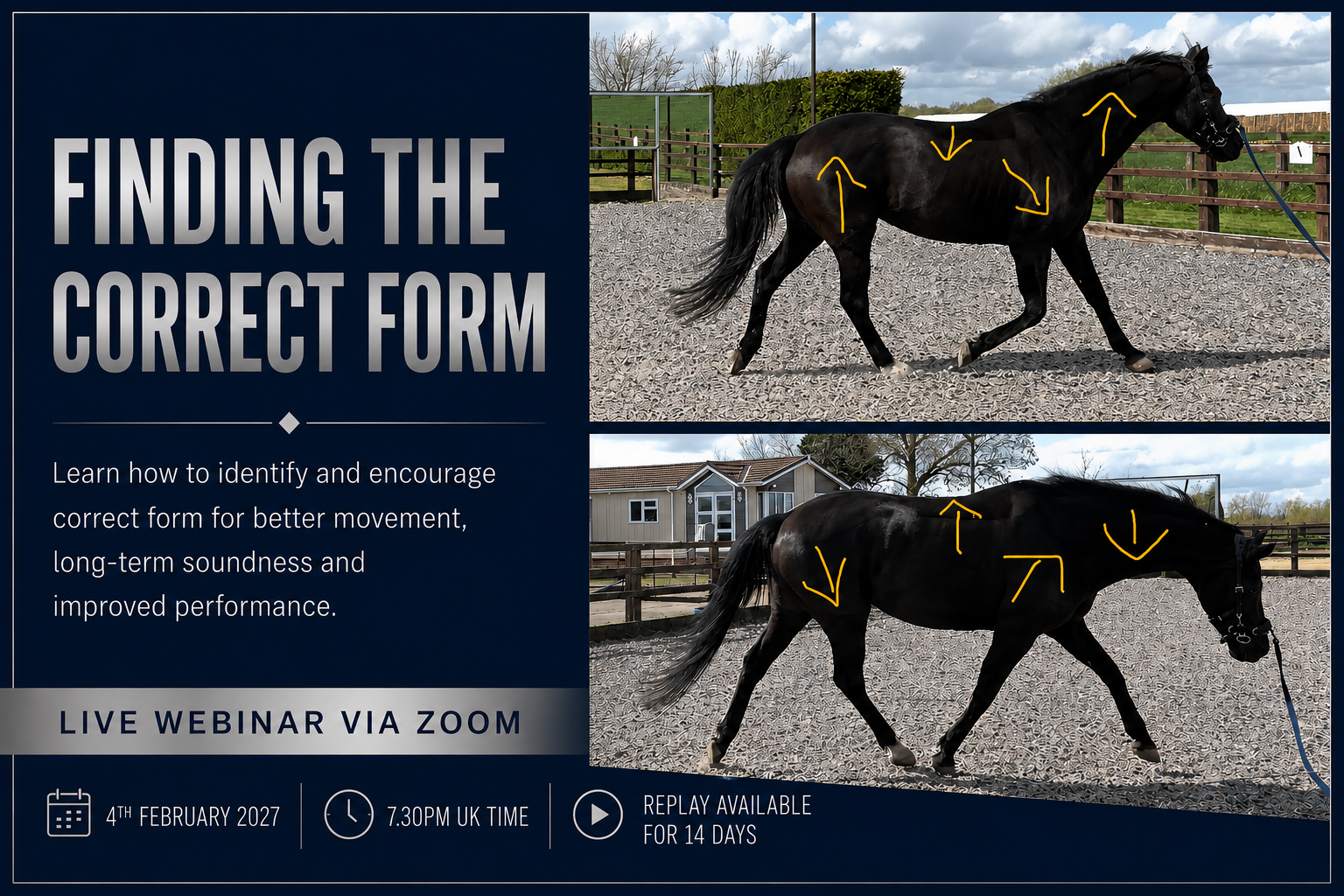
In Finding the Correct Form, we’re going to explore how the form a horse uses during an exercise determines the physical effect that exercise has on their body.
We’ll look beyond simply asking whether the horse can complete an exercise and start asking a much more important question:
How do they need to use their body while doing it?
Using practical examples, we’ll look at how changes in balance, alignment, posture and spinal function can completely change the value of an exercise.
We’ll explore what happens through the horse’s body when the form is incorrect, how existing compensations can creep back into the work, and how an exercise intended to improve the horse can sometimes reinforce the patterns we’re actually trying to change.
We’ll also look at what we’re trying to create instead.
Where should the horse’s weight be? What should be happening through the spine? How do the neck, thoracic region, back and pelvis relate to one another? How can we recognise when the horse is beginning to use their body more effectively?
And importantly, how do we know when we need to change what we’re asking?
Because there isn’t one universally “correct” form that every horse should immediately be placed into.
The form we ask for needs to reflect the horse in front of us, their current physical ability, the dysfunctions and compensations we’re trying to change, and the stage they have reached within their training.
The aim isn’t simply to perform an exercise correctly.
It’s to understand what you’re trying to train within the body and recognise the form that allows that change to happen.
Because the exercise doesn’t create the result by itself.
The form the horse performs it in determines what you’re actually training.
Webinar details
Date: Thursday 4th February 2027
Time: 7.30pm UK time
Location: Live online via Zoom
Price: £15
Replay: Available for 14 days following the live webinar
You don’t need to attend live to take part. If you can’t make the live session, you will still have access to the replay for 14 days.
Want to follow the complete process?
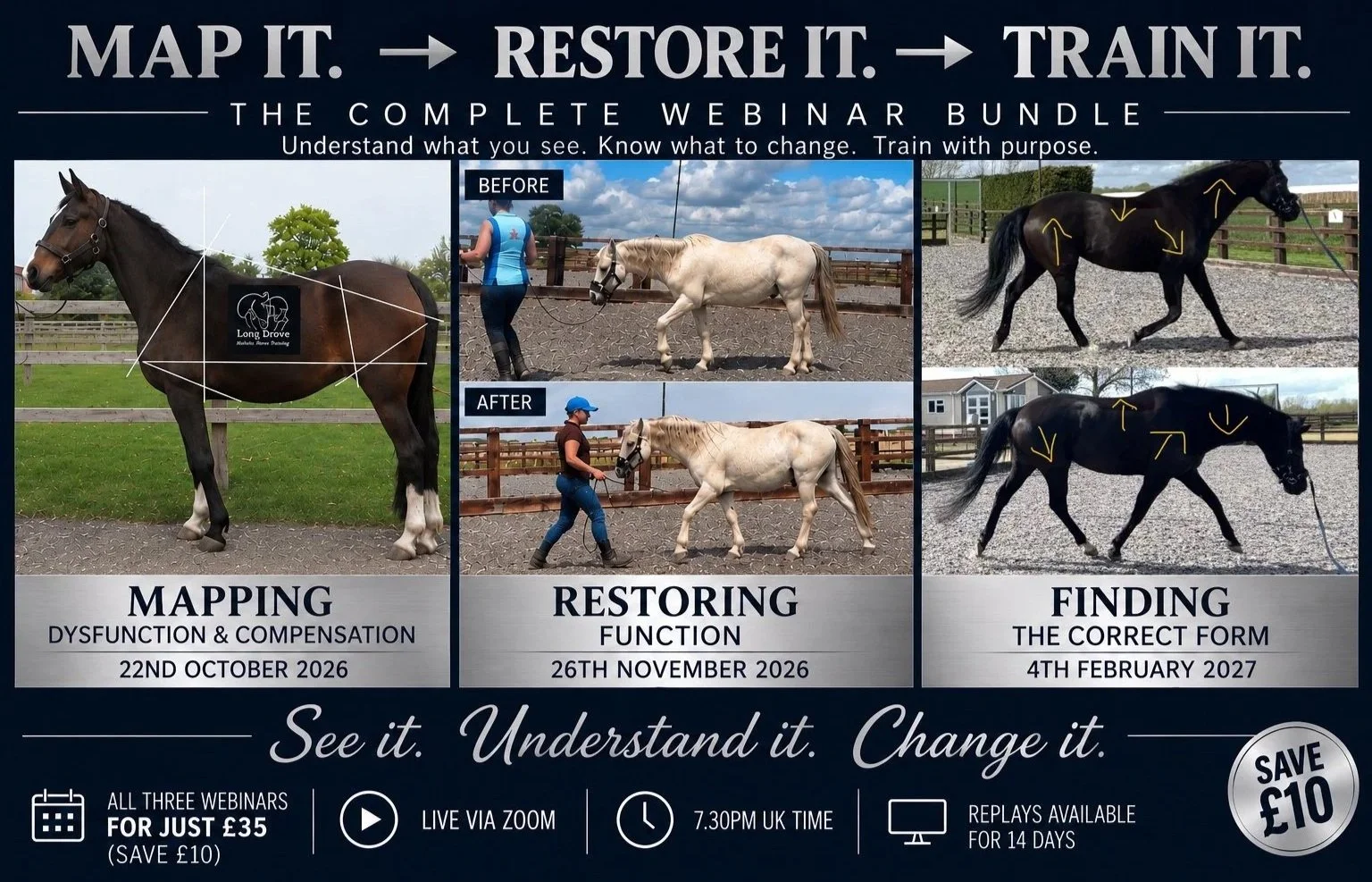
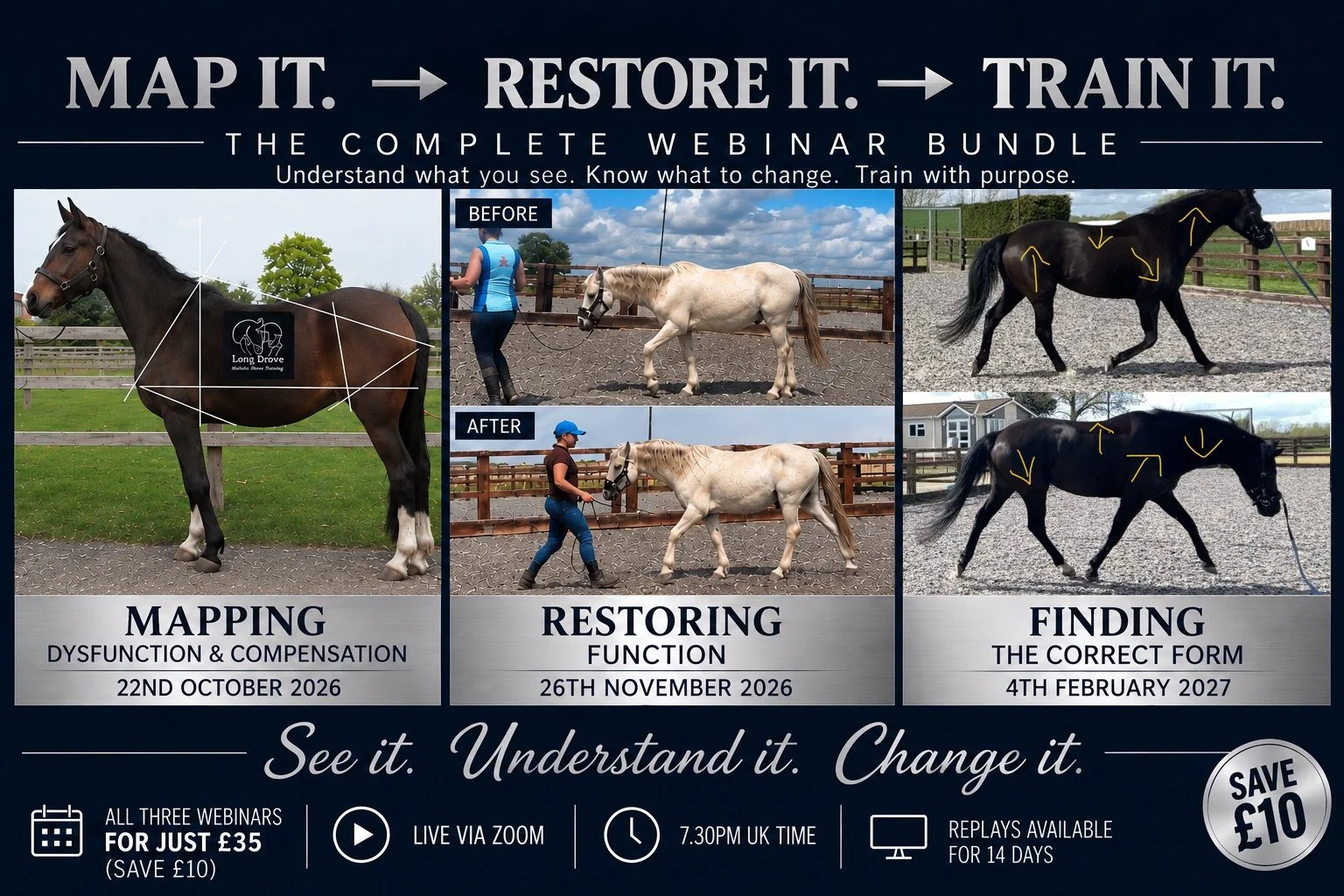
Map it. Restore it. Train it.
Finding the Correct Form is one of three standalone webinars exploring the process I use to understand and influence the way a horse’s body functions.
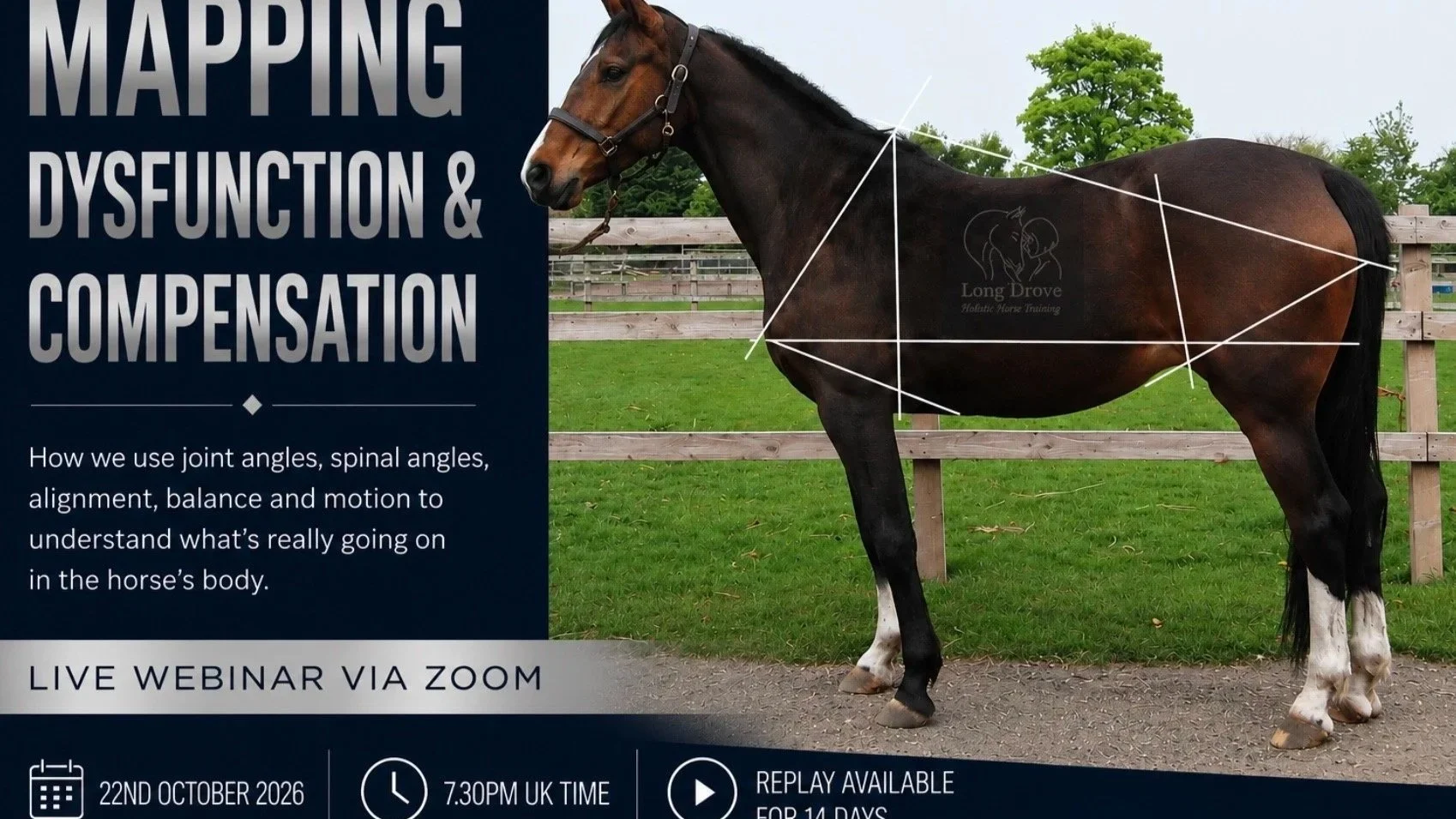
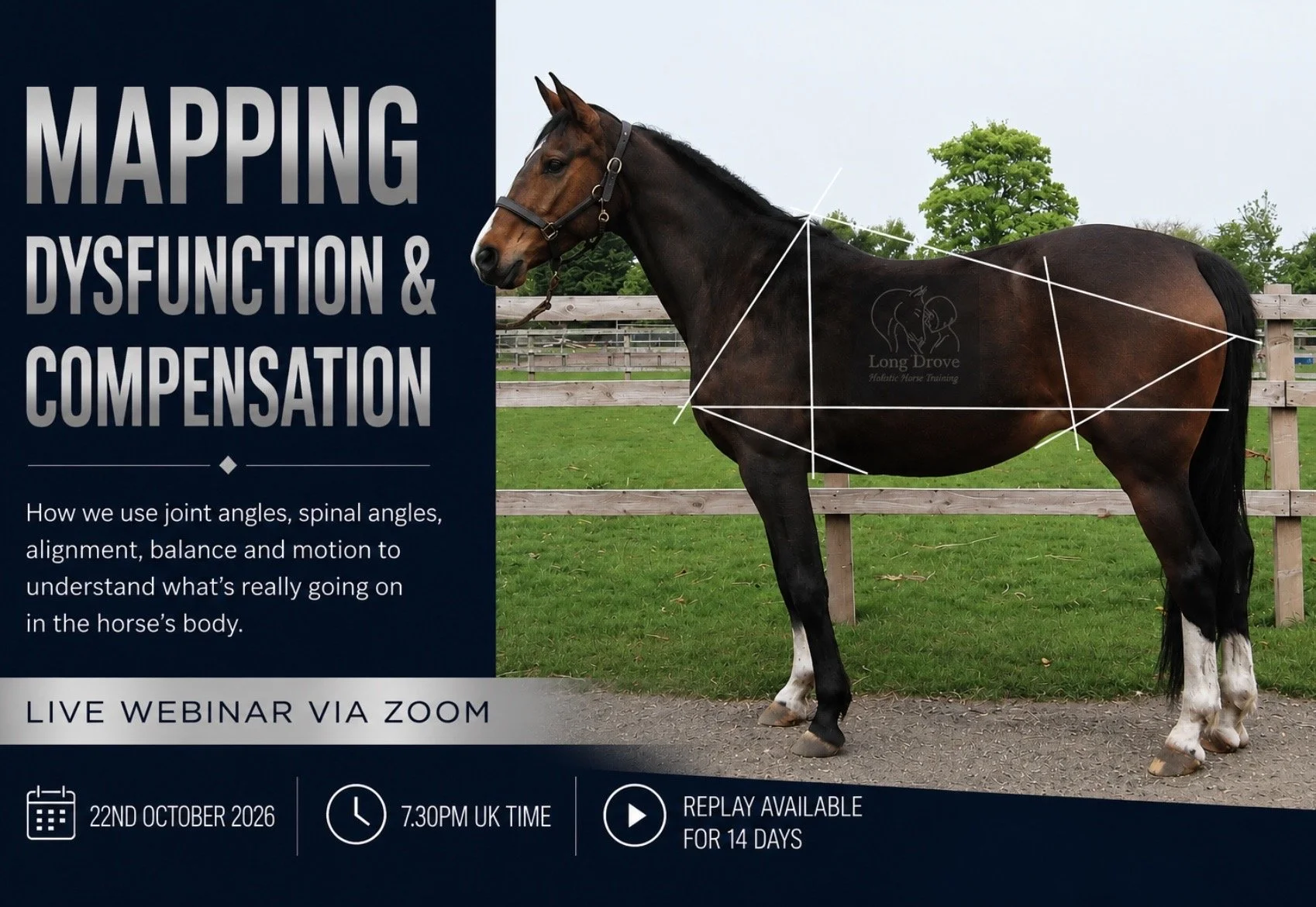
Mapping Dysfunction & Compensation
Map what is happening within the body and understand the relationships between dysfunction and compensation.
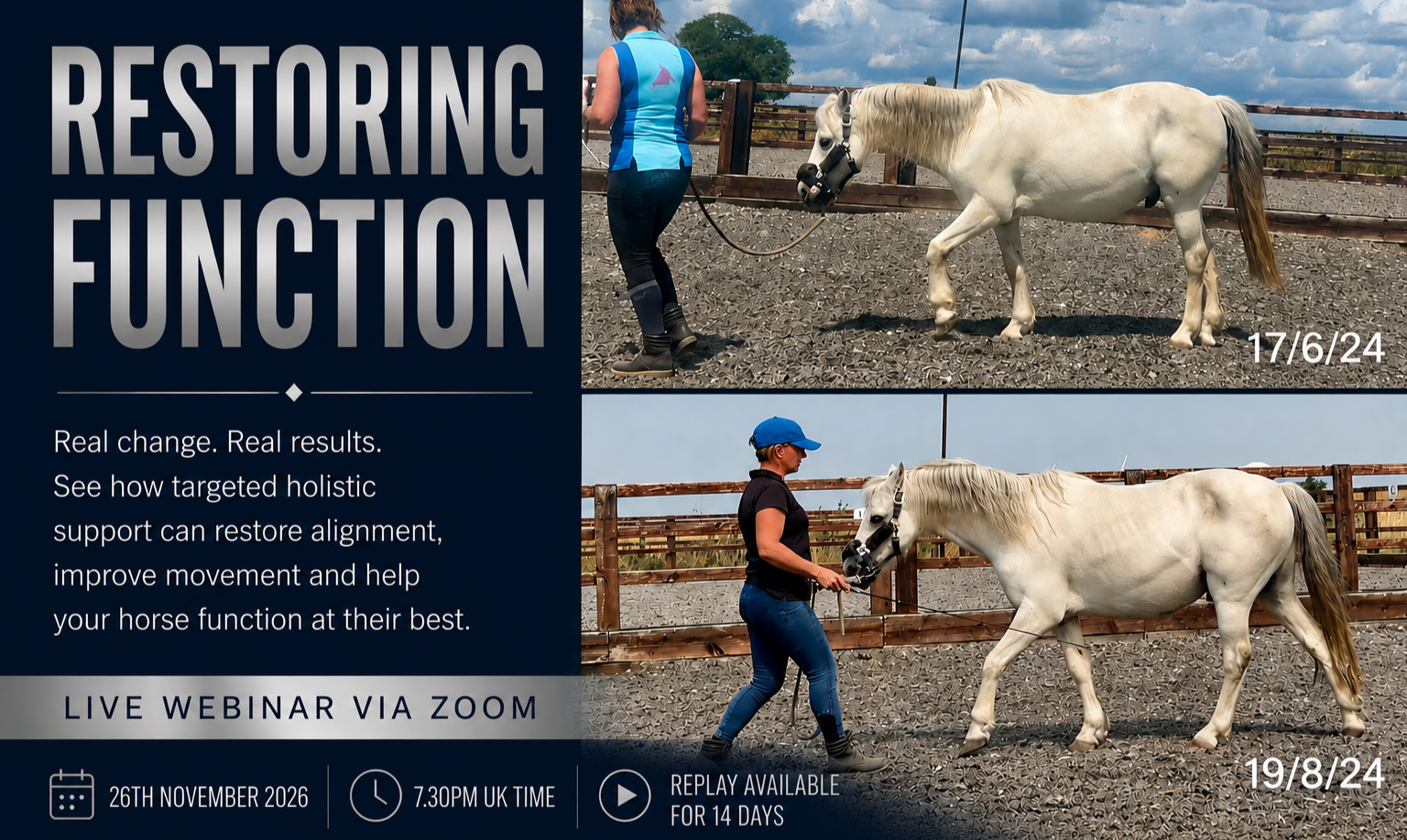
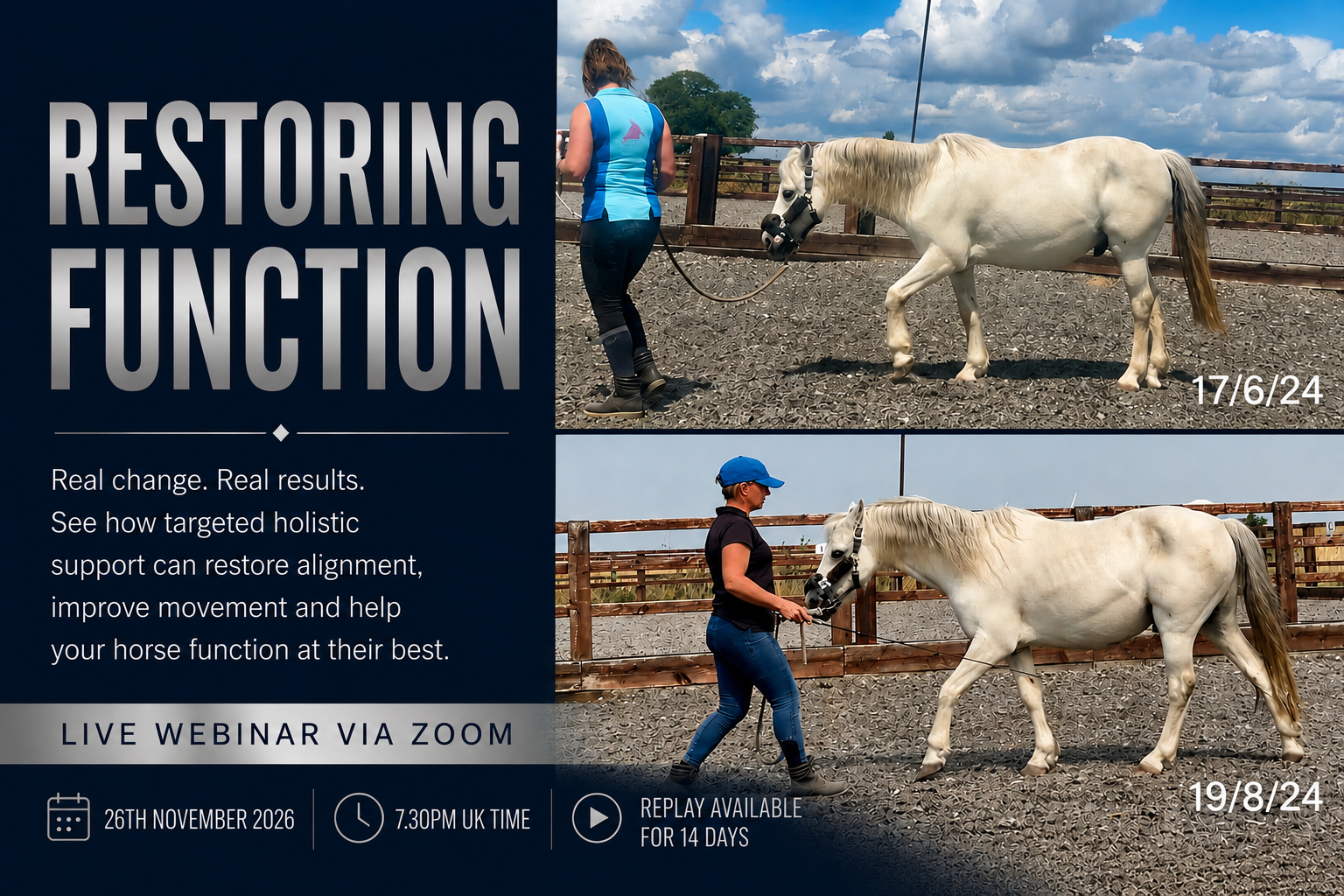
Restoring Function
Take that information and explore what needs to change, what to prioritise and where to begin.
Finding the Correct Form
Understand why the form in which your horse performs an exercise determines what you are actually training.
Each webinar can be booked individually for £15, or you can book all three together for £35, saving £10.
The webinars stand alone, so you don’t need to attend all three. But if you want to follow the complete process from understanding what you see, through deciding what needs to change, to understanding how the horse needs to use their body during training, the three webinars are designed to work together.
Book Finding the Correct Form for £15, or choose the complete Map It. Restore It. Train It. webinar bundle for £35 and save £10.
Map it. Restore it. Train it.
Finding The Correct Form
Thursday 4th February 2027 | 7.30pm UK time | Live via Zoom | £15
An exercise is only as useful as the way the horse performs it.
We can choose an exercise because we want to improve strength, balance, mobility, spinal function or engagement, but that doesn’t necessarily mean those are the things the horse is actually training.
Because the horse can perform the same exercise in very different ways.
They can shift their weight onto the forehand. Drop through the thoracic region. Brace through the neck or back. Alter the position of the pelvis. Lose spinal alignment. Or simply use an existing compensation to find another way of completing what we’ve asked them to do.
The exercise may look successful.
But what is the body actually training?
In Finding the Correct Form, we’re going to explore how the form a horse uses during an exercise determines the physical effect that exercise has on their body.
We’ll look beyond simply asking whether the horse can complete an exercise and start asking a much more important question:
How do they need to use their body while doing it?
Using practical examples, we’ll look at how changes in balance, alignment, posture and spinal function can completely change the value of an exercise.
We’ll explore what happens through the horse’s body when the form is incorrect, how existing compensations can creep back into the work, and how an exercise intended to improve the horse can sometimes reinforce the patterns we’re actually trying to change.
We’ll also look at what we’re trying to create instead.
Where should the horse’s weight be? What should be happening through the spine? How do the neck, thoracic region, back and pelvis relate to one another? How can we recognise when the horse is beginning to use their body more effectively?
And importantly, how do we know when we need to change what we’re asking?
Because there isn’t one universally “correct” form that every horse should immediately be placed into.
The form we ask for needs to reflect the horse in front of us, their current physical ability, the dysfunctions and compensations we’re trying to change, and the stage they have reached within their training.
The aim isn’t simply to perform an exercise correctly.
It’s to understand what you’re trying to train within the body and recognise the form that allows that change to happen.
Because the exercise doesn’t create the result by itself.
The form the horse performs it in determines what you’re actually training.
Webinar details
Date: Thursday 4th February 2027
Time: 7.30pm UK time
Location: Live online via Zoom
Price: £15
Replay: Available for 14 days following the live webinar
You don’t need to attend live to take part. If you can’t make the live session, you will still have access to the replay for 14 days.
Want to follow the complete process?
Map it. Restore it. Train it.
Finding the Correct Form is one of three standalone webinars exploring the process I use to understand and influence the way a horse’s body functions.
Mapping Dysfunction & Compensation
Map what is happening within the body and understand the relationships between dysfunction and compensation.
Restoring Function
Take that information and explore what needs to change, what to prioritise and where to begin.
Finding the Correct Form
Understand why the form in which your horse performs an exercise determines what you are actually training.
Each webinar can be booked individually for £15, or you can book all three together for £35, saving £10.
The webinars stand alone, so you don’t need to attend all three. But if you want to follow the complete process from understanding what you see, through deciding what needs to change, to understanding how the horse needs to use their body during training, the three webinars are designed to work together.
Book Finding the Correct Form for £15, or choose the complete Map It. Restore It. Train It. webinar bundle for £35 and save £10.
Map it. Restore it. Train it.